Form Translation
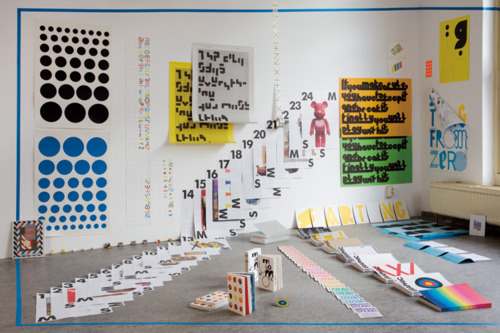
스스로의(auto.) 삶을(bio.) 기록(.graphy)하는 작업은 태생적으로 주관적이다. 스스로 자신의 과거를 재생산하는 일이기도 하다. 일상 속의 수집(miscellany)은 스스로의 삶을 기록을 보여주는 행위 중의 하나이며, 과거를 재생산, 재편집 하기에도 적합한 프로세스다.
– Your Autobiography with Everyday Miscellanies, 김영나
The task of recording (.graphy) one's own (auto.) life (bio.) is inherently subjective. It is also the work of reproducing one's own past. Daily miscellany is one of the ways we document our lives, and it's a process that lends itself to recreating and re-editing the past.
– Your Autobiography with Everyday Miscellanies, Na Kim
How do we “unlock” the character and history of an object through graphic exploration? In this short exercise, we will work in pairs and do some quick experiments with different ways to interpret our mementos in a graphic way. The goal of this exercise is to get at the “meaning” embedded in the object that is both inherent to its properties, and imbued upon it by our relationship to it.
Spend ~1 hour trying as many of these procedures as possible to see what emerges from your souvenir. If you only have a digital souvenir, try and see how you can materialize it as an object (or find a surrogate object) to test.
1. Graphic Index
Dissect (literally or figuratively) your object and extract, then organize, all of its graphic characteristics. Find any numbers, letters, shapes, colors, etc. and isolate / redraw them. Then, organize them in a graphic fashion.
Ex:
- Functional Typography by Sulki and Min
- Concept Drawings by Sulki and Min
- Ephemera by Sulki and Min
- The Book of Chances by Sulki and Min
- Found Composition 3 by Na Kim
2. Textual Index
Describe the object in writing. Try and create an index listing every component of your memento. Organize your list of terms / descriptions in a variety of ways (alphabetically, emotionally, chronologically, etc.). Remember LATCH.
Ex:
- I Swear I Use No Art at All by Joost Grootens
- Toward Frission by Tiger Dingsun
3. Textural Index
Use the object as a mark-making surface. Try using the provided inks and paints to use your object as a stamp, brush, roller, etc.
Ex:
- Counterprint by Karel Martens
4. 3d → 2d.
Use the flatbed scanner to transform your 3d object into a 2d one. Experiment with regimented and chance movement as you scan (alternatively, use the scan method in your phone to scan the object).
Ex:
- DPI by Lai Xu
5. 3d → 3d?
Using a photogrammetry application or LIDAR (one option is to use the Polycam app) experiment with the translation from 3D to 3D(?) graphics which occurs.
Ex:
- Sltiiflel-Stilllife by Sarok
- Postcards from Google Earth by Clement Valla
- 3D Maps Minus the 3D are.na channel by Clement Valla
6. Scale
Try to scale up or down your object by a severe amount. Break apart your object and scale up and down its pieces.
Ex:
- THE SHOW ROOM by Na Kim
7. Text to Image
Describe your memento to a text-to-image AI such as Dall-E or Mid Journey. Test how you describe the object, and what you ask of the GPT, alters the outcome and what it tells you about the tendencies of the AI (and your perception of your object).
Ex:
- Generative AI Takes Stereotypes and Bias From Bad to Worse by By Leonardo Nicoletti and Dina Bass
- Please stop using AI to make Wes Anderson parodies by Stuart Heritage
- Why Google's 'woke' AI problem won't be an easy fix by Zoe Kleinman
Try linking together processes to see what happens :)
Now that you’ve created your visual material, collect it and reflect on the outcomes considering how the process changed (hopefully) your understanding of your memento. Share some thoughts with the class.
Optionally: Using your outcome(s) create a digital graphic composition for your object to express your relationship to it.